
An ENS domain is a human-readable name, like name.eth, that stands in for a long blockchain address. ENS — the Ethereum Name Service, launched in May 2017 — maps these names to addresses the way internet DNS maps website names to numbers. You send to a name; the wallet resolves it; the address never has to be typed.
Crypto assets are volatile and can lose most or all of their value quickly — .eth names included, as 2022 showed — and nothing here is a reason to buy any of them.
What problem does an ENS name solve?
Raw addresses are 42-character hexadecimal strings, and humans are terrible at them: one wrong character and the money lands somewhere unrecoverable. An ENS name replaces that string with something you can read, remember, and double-check. The address still exists underneath — the name is an alias, not a replacement.
Compare the experiences. Typing 0xd8dA6BF26964aF9D7eEd9e03E53415D37aA96045 character by character is error-prone at best. Typing alice.eth is not. The wallet does the substitution; the blockchain never sees the name at all — transactions always carry the resolved address.
Checksums in modern wallets catch many typos in raw addresses — a mis-typed character usually changes the checksum, and the wallet warns. But checksums cannot make a hex string readable, and they cannot help you notice that you pasted the right address for the wrong person. Names change what you can verify at a glance, which is why they matter — and also why, later in this article, they attract scammers.
How does a name resolve to an address?
On-chain lookup. When you type a .eth name, the wallet queries ENS's registry contract, which points to a resolver for that name, which returns the address — all on Ethereum, in a fraction of a second. Set a reverse record and the address can display as the name too. No central company sits in the middle.
The internet's DNS is the natural analogy, and it is a good one to a point — both translate names into machine identifiers. The analogy breaks down at governance: DNS is administered through registrars under coordinated policy; ENS is a set of smart contracts whose rules execute on Ethereum, with names held as tokens in wallets. There is no ENS customer-service desk that can "fix" a record; there is only what the contracts say.
Names can carry more than an address. A resolver can hold records for multiple cryptocurrencies, an avatar, a URL, and arbitrary text fields — which is why a .eth name often functions as a profile: one name that wallets and dApps can read for details the owner chose to publish.
How do you get and keep one?
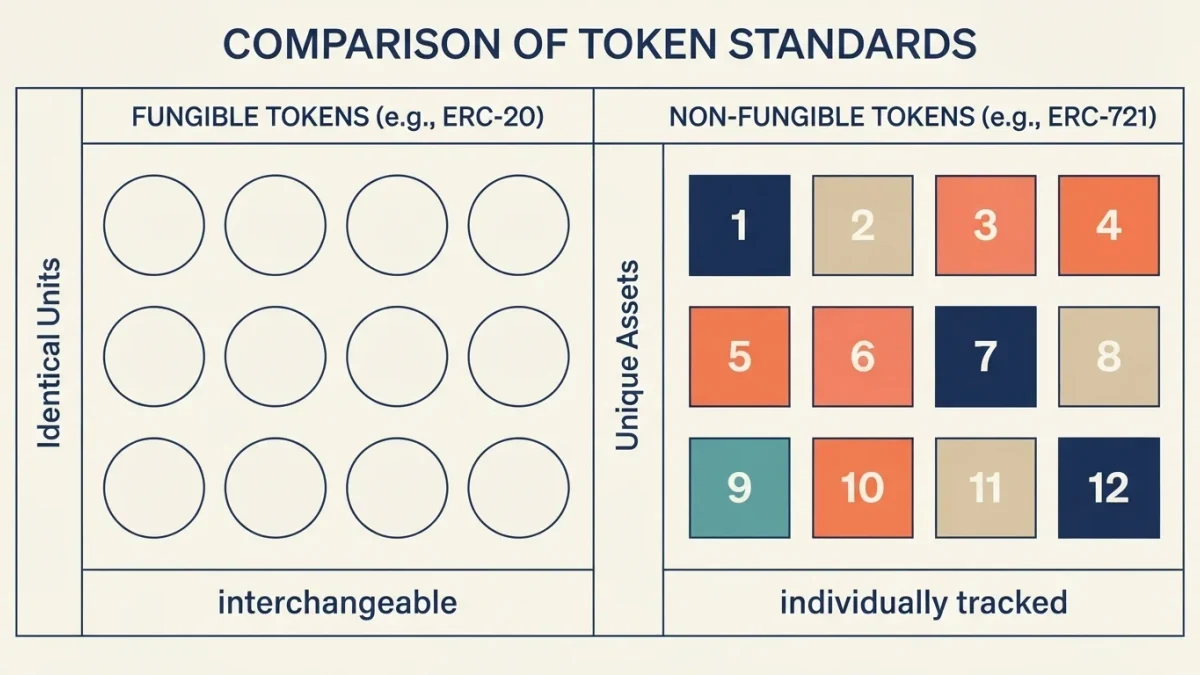
You register an unused name through the ENS app, pay a registration price plus transaction fees, and the name is issued to your wallet as an ERC-721-compatible token. Holding it costs an annual renewal fee; miss renewals past a grace period and the name returns to the market. Names no one renews get released.
Pricing scales with length: common long names cost dollars a year; short names cost dramatically more. The early years used auctions; current registration is instant at posted prices, with the annual rent doing the scarcity work.
The ownership structure is worth understanding precisely. Your name is a token, transferable like any NFT — sell the token, sell the name. Whoever controls the wallet that holds it controls its records. And owners can mint subnames under their name — shop.alice.eth — issuing them or renting them out as they choose. This is mechanics, not encouragement: a name is a small ongoing responsibility, not a one-time purchase.
Why did .eth names trade like collectibles?
Because a .eth name is itself an NFT, and 2022 turned short ones into status objects. By October 2022, .eth names were the fourth-most-traded category of NFT, per Reuters — the biggest seller in a blockchain-domain boom driven by three- and four-digit names and brand words. Speculation, plainly labeled.
Reuters' October 2022 report on the trading craze described names like three-digit .eth labels flipping for five and six figures at the peak — pricing driven by scarcity and identity signaling, not by the names' utility for receiving payments. As with NFTs generally, the speculative tier deflated hard after the boom.
The useful and the speculative parts coexist. Most .eth names are ordinary, cheap, and quietly doing their job — making an address readable. A thin layer of short names became a casino. Judging the technology by either layer alone gets the story wrong.
How do scammers abuse ENS names?
By exploiting the trust readability creates. Scammers register lookalike names — swapping letters, adding digits — and use them in casual channels, because a readable name feels verified even though ENS verifies only uniqueness, not identity. Some also send tiny amounts from lookalike names to pollute your transaction history.
The mechanics are simple and effective. a1ice.eth next to alice.eth, or alice-eth.eth, or any of a hundred near-misses — each is a legitimate, uniquely registered ENS name that belongs to whoever registered it. ENS guarantees no two names are identical; it says nothing about who you are talking to. A verified-looking name in a DM is a costume, not a credential.
The history trick is nastier. An attacker sends a near-zero payment from al1ce.eth, which then sits in your wallet's history looking convincingly like a past counterparty. Copy the "familiar" address from history instead of verifying fresh, and the next send goes to the scammer. This works precisely because readable names make history feel trustworthy.
The mechanical defense is boring and effective: for anything significant, resolve the name and compare the full 42-character address against a source you trust independently — a second channel, a published address, an in-person confirmation. The name is a convenience; the address is the fact.
ENS, in sum, gave blockchain addresses something the web had since the 1980s: names people can read. The upgrade is real, and so is the newest rule it imported — readable names can be counterfeited almost as easily as they can be remembered.