A dApp — a decentralized application — is an app whose core logic runs on smart contracts on a public blockchain instead of a company's private servers. You sign in with a crypto wallet rather than an email and password. The interface may look ordinary, but what happens underneath — and who can switch it off — changes completely.
Crypto assets are volatile and can lose most or all of their value quickly, and nothing in this article is a reason to buy any of them.
What makes an app a dApp?
Three properties, loosely. First, the rules live on-chain: a dApp's core logic is smart contracts that a public network executes. Second, no operator can unilaterally change those rules. Third, the data is public — anyone can audit what the contracts hold. The front end, the part you see, is usually an ordinary website.
That last point surprises people. When you use a dApp, your browser talks to a normal website — hosted wherever websites live — and that website talks to the blockchain on your behalf. The polish sits off-chain; the commitments sit on it.
So "decentralized" describes the engine, not the whole car. A project can deploy unstoppable contracts and still run a corporate website, run its social accounts, and hold the domain name. Judging a dApp means checking which parts are actually on-chain — usually by finding the contracts' public addresses and code, which any honest project publishes.
How is logging in with a wallet different?
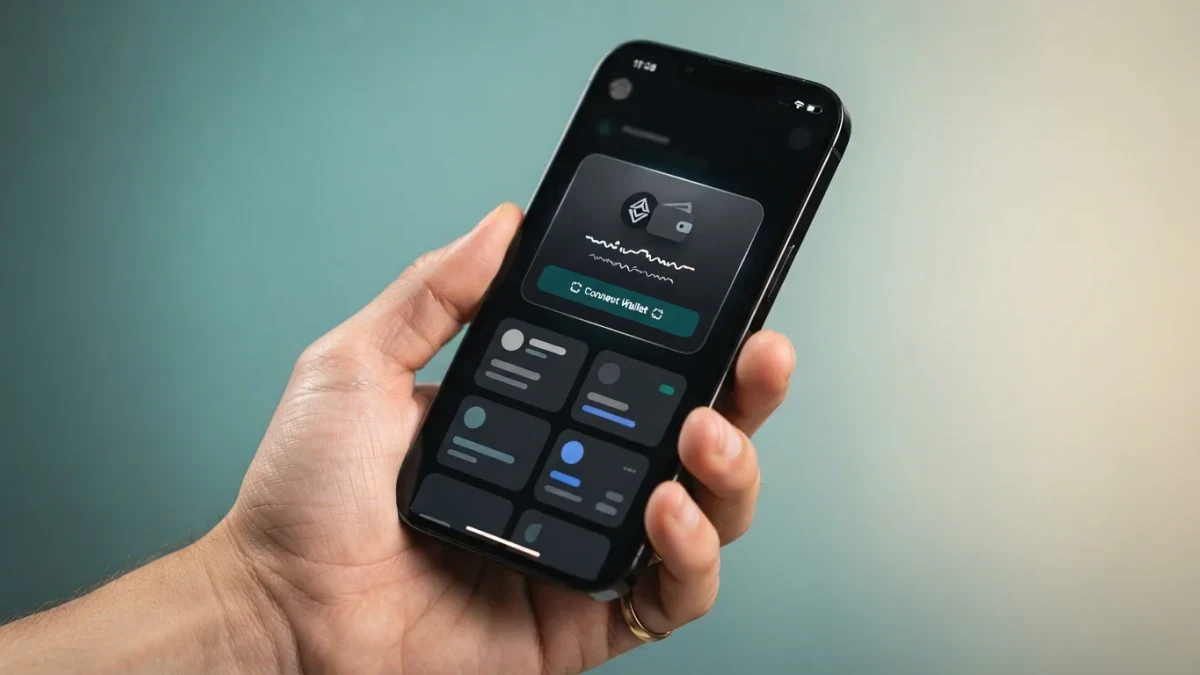
Your wallet becomes the login. Instead of creating an account, the dApp asks your wallet to sign a message proving you hold the keys to an address. No password is stored, no email to leak. The trade: the dApp sees that address, and losing your keys loses the account — permanently.
Two kinds of signature matter, and confusing them is expensive. A message signature just proves key ownership; it is free and moves nothing. A transaction changes the chain — sends funds, mints something, grants a permission — and costs a network fee. Login screens use the first kind. Anything involving money uses the second.
Then there is a third thing that looks harmless and is not: approvals. To let a trading contract move your tokens, you grant it a spending allowance. Many dApps default to asking for an unlimited allowance, and those grants sit there until revoked. Treat every approval prompt as the security decision it is — check the amount, question "unlimited," and revoke allowances you no longer need.
What can a dApp do that a normal app can't?
Two things. Censorship resistance: with no operator, there is usually nobody who can ban your account or switch the service off. And composability: dApps on the same chain can use each other's contracts like public building blocks. These are real capabilities, and they arrive packaged with the downsides in the next section.
Composability is the quiet superpower. People call the pieces "money legos" — an analogy, so here is the precise version: contracts on the same blockchain can call one another directly, with permission built in by default. A lending protocol can use an automated market maker's prices; an insurance contract can wrap around both.
The stock example is Uniswap, the token-swapping dApp launched in November 2018. Because its contracts are public and permanent, hundreds of other interfaces and protocols built on top of them without asking anyone's permission. In traditional finance, that kind of reuse requires partnerships and lawyers; on a public chain, it requires code.
What are the downsides?
Expect friction. Transactions cost fees and can be slow. Mistakes are irreversible — a wrong address or a malicious approval is usually final. Many dApp interfaces are clunky, and approvals you grant can linger. And the convenient website can disappear while the contracts live on, leaving you talking to raw code.
The responsibility shift is the big one. A bank or app store sits between you and your mistakes: it can reverse charges, freeze fraud, restore accounts. A dApp's contracts execute exactly what you sign. If a convincing clone of the front end tricks you into signing a transfer, the chain will faithfully carry out the theft.
Centralization sneaks back in through side doors. The website can be seized, the domain can lapse, and the default gateways many wallets use can go down — the contracts keep running, but you may lack a comfortable way to reach them. A dApp is only as decentralized as its weakest publicly visible link.
Has a dApp ever caused trouble at scale?
Yes — famously, cats. CryptoKitties, a game for breeding collectible digital cats, launched in late 2017 and became so popular that, per the BBC in December 2017, it was slowing down the entire Ethereum network. A single dApp had congested a platform shared by every other application.
Think of a public blockchain as a shared highway — an analogy, and it fits better than most: every dApp's traffic uses the same lanes, and when one app floods the road, everyone's trip slows and the tolls spike. In December 2017, that meant stalled transfers and spiking fees across Ethereum, not just for cat buyers.
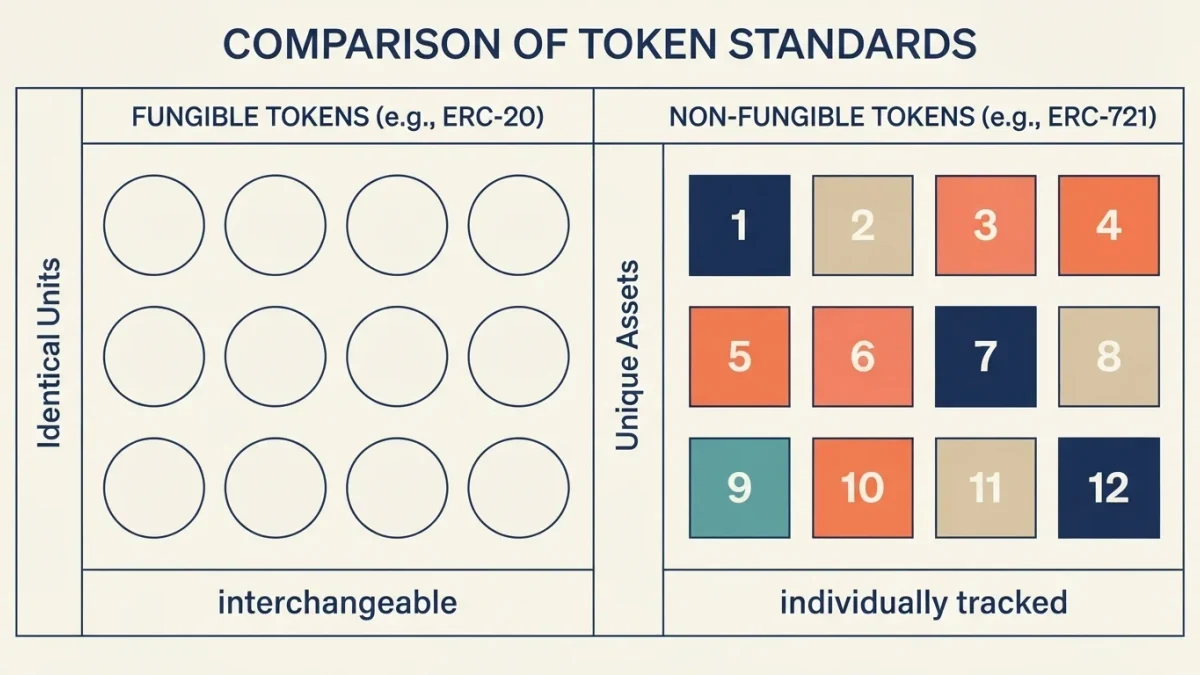
The episode taught the industry two lessons. Block space is finite, so popular dApps can tax strangers — the push toward scaling networks traces back partly to those weeks. And the cats themselves became the template for non-fungible tokens, the standard that later made NFTs possible. One congestion event, two industries reshaped.
The working definition to keep: if the rules run on a public chain, anyone can verify them, and no single party can quietly change them, you are looking at a dApp. Whether that architecture helps you in a given case is a separate question — one worth asking every single time.