A blockchain node is any computer that runs a blockchain's software and keeps a copy of its shared record. Nodes check every transaction and every block against the rules, relay valid data to peers, and together form the network itself. There is no head office: the nodes are the blockchain's infrastructure and its referees.
Crypto assets can lose most or all of their value quickly, and nothing on this site is a reason to buy any of them. Infrastructure explains how networks stay honest — it says nothing about any asset's prospects.
What do full, light and archive nodes do?
A full node downloads the entire block history and checks every transaction against the rules from scratch — it trusts nobody's summary. A light node reads only block headers and leans on full nodes for details. An archive node additionally keeps every intermediate ledger state, which researchers and explorers need.
The differences are about how much each machine verifies and stores. A full node starts at the genesis block and re-derives today's balances itself, so a lie has to fool its own hardware to get through. A light node — the mode most phone wallets use — checks cryptographic proofs instead of the whole history, trading some independence for a download that fits in an app.
Archive nodes are the memory. They can answer questions like what this address held in 2019, which a normal full node has pruned away. They are expensive to feed, so companies and explorers run most of them — one more quiet way the ecosystem divides labor.
Who runs nodes, and why bother?
Merchants who want payments verified without asking permission, exchanges checking deposits, developers testing changes, researchers counting activity, and hobbyists who simply prefer verifying over trusting. Running a full node means your machine rejects invalid blocks no matter who mined them — which is the whole point of the exercise.
Most of these operators earn nothing from it. A node is not a miner: it collects no block rewards and no fees. The motivation is self-interest of a specific kind — a merchant's node confirms payments without depending on anyone else's server, an exchange's nodes guard against exactly the frauds that hit smaller chains in 2019, and a hobbyist's node means never having to trust a stranger's explorer screenshot.
Think of it like every shopkeeper in a town keeping a complete copy of the town's ledger — the analogy breaks down here: paper copies drift and contradict, while software copies either agree perfectly or split into separately named networks. Agreement is the product; the copies are just how it gets manufactured.
What happens if there are only a few nodes?
Verification quietly concentrates. Every remaining copy becomes easier to pressure, subpoena or simply switch off, and ordinary users have no independent way to check what they are told. The chain may keep running, but the property that made it interesting — many uncoordinated referees — thins out with each node that leaves.
The number worth watching is not the raw count but the spread. Ten thousand nodes in one cloud region, under one provider, are less independent than a thousand spread across homes, offices and continents. Public dashboards that map reachable nodes exist for the major chains, and researchers treat both numbers — count and concentration — as health indicators.
There is a historical footnote worth knowing. Node counts have always been a political number in this industry: dashboards undercount private nodes, advocates overcount virtual ones, and both sides argue from the same sparse data. The sturdier habit is to ask a different question — not how many copies exist, but who can afford to keep one, and whether that set is growing narrower or wider.
Are nodes the same thing as miners?
No, and the difference matters. Miners and validators produce new blocks; nodes check them afterward. A miner who tried to pay themselves coins out of thin air would see every full node reject the block, because rules live in the node software, not in whoever has the most hardware.
This separation is the network's backstop. Block producers can be large, pooled and industrial — they usually are — while rule-checkers can be small, cheap and numerous. When a controversial rule change has been proposed anywhere in this industry, the practical question was never only what miners would accept, but what the running nodes would keep rejecting. Producers write the pages; nodes decide what gets bound into the book.
Could you run a node yourself?
If you can spare a modest computer, some disk space and patience, yes — full node software for major chains is free and open source, and the initial synchronization, which verifies the whole history, typically takes from hours to days on ordinary hardware. It is the most direct verify-it-yourself step in this space.
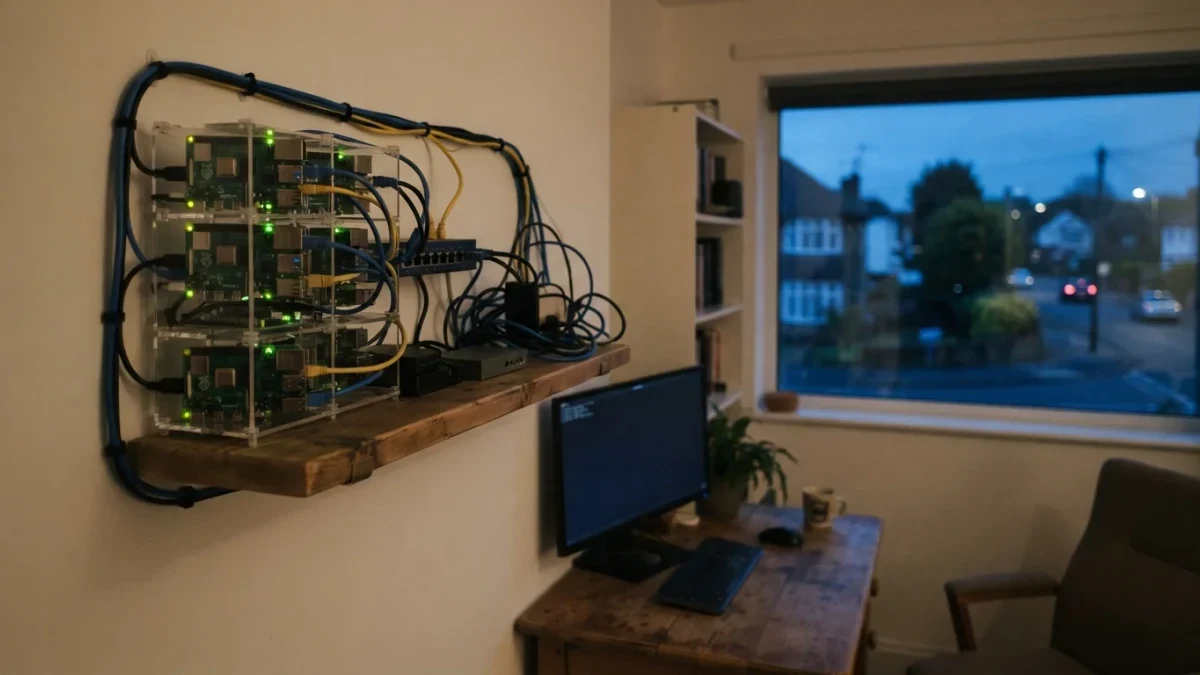
The honest costs are storage and bandwidth. A Bitcoin full node wants on the order of several hundred gigabytes kept current; a full Ethereum node wants roughly a terabyte or more as of 2025, and archives want multiples of that. None of this needs to run on a laptop you carry — an old mini-computer on a shelf does the job, quietly, the way thousands of them already do.
Is it worth it? For most people, no — light wallets are a reasonable everyday compromise. For anyone handling meaningful sums, living off exchanges, or simply wanting to check the network's claims without borrowing someone else's eyes, a node is the closest thing this industry has to reading the primary source.