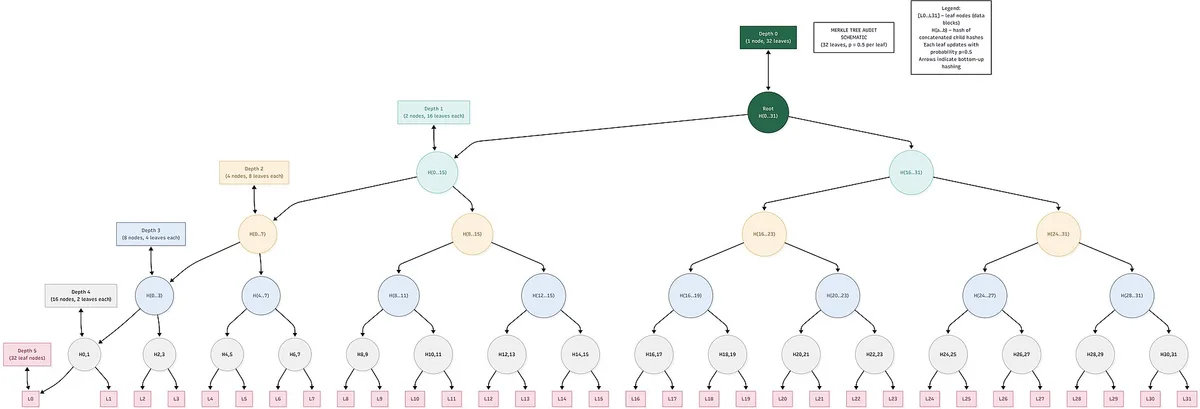

A blockchain is a distributed ledger: a shared record of transactions kept across many computers, where each block of data is linked to the one before it using cryptographic hashes. That is the core blockchain definition, and it is narrower than most marketing suggests. The record is hard to alter, but not impossible — changing it means rewriting every later block and convincing the network's consensus rules to accept the rewrite.
The confusion starts because the same handful of words — coin, token, ledger, layer, node — get stretched to cover different things. Below are twelve terms that get mixed up most often, what each one actually means, and where the mix-up causes real problems.
Coin vs. token: what is the difference?
A coin is the native asset of its own blockchain. Bitcoin runs on the Bitcoin blockchain; ether runs on Ethereum. The coin pays the network's own fees and is tracked in the chain's base ledger.
A token is an asset issued on top of a blockchain that already exists. It has no chain of its own. Its ownership is recorded by the host chain, the way a note written in someone else's ledger is still just an entry in that ledger. The analogy breaks down here: a token is not a physical thing sitting on a chain — it is a ledger entry that a smart contract controls.
Why it matters: tokens inherit the security of the chain they live on, and their rules live in code that can have bugs. A coin and a token with the same ticker symbol are not the same asset.
Ledger vs. blockchain vs. database
According to Wikipedia, a blockchain is a distributed ledger with growing lists of records (blocks) securely linked together via cryptographic hashes, each block containing a hash of the previous block, a timestamp, and transaction data. So every blockchain is a kind of ledger, but not every ledger is a blockchain.
A plain database is usually controlled by one administrator, who can edit or delete records. IBM describes blockchain as a shared digital ledger where validated records cannot be deleted — even by a system administrator — and where an error is corrected by adding a new transaction, leaving both visible. That difference in who can change the record is the whole point. It is also why a "blockchain" that one company fully controls is closer to a database with extra steps. IBM's own framing stresses that the benefit comes from sharing the ledger across network members without a traditional intermediary.
Block vs. transaction vs. block height
A transaction is a single record — a transfer, a contract call. A block is a batch of verified transactions bundled together, plus a timestamp and a hash of the previous block. Blocks are added at intervals set by the protocol; the block height is simply the count of blocks since the first one.
People also mix up "on-chain" and "confirmed." A transaction can appear in a block explorer before it is final. What finality means — and when a transaction is truly settled — depends on the chain's rules, which is why we keep a separate explainer on what block finality means.
Node vs. miner vs. validator
A node is a computer that stores and checks the chain's data. That is the base role, and anyone can run one. Miners and validators are specialised roles on top: they propose or attest to new blocks and get paid for it, under the chain's consensus mechanism. Not every node mines or validates, and not every miner runs a full node.
The mix-up matters for security claims. "Thousands of nodes" does not automatically mean a network is safe if block production sits with a small set of validators. Our primer on what a blockchain node is covers the roles in detail.
Layer 1 vs. Layer 2 vs. sidechain
Layer 1 is the base blockchain — the chain that settles transactions and enforces its own consensus. Layer 2 is a system built on top that processes transactions elsewhere and posts results back to the base chain, which inherits the security guarantee. A sidechain runs with its own security and merely moves assets across; if its validators fail, the base chain does not rescue it.
Calling every scaling project "Layer 2" is a common error, and it hides who actually bears the risk. The full comparison is in Layer 1 vs Layer 2, explained.
Fork vs. attack vs. reorganisation
A fork is a divergence in the chain — sometimes planned, as with a protocol upgrade. Soft forks and hard forks differ in whether old nodes still accept new rules; our explainer on hard forks vs soft forks walks through it. A reorganisation is a short, usually accidental fork that gets resolved when one branch wins. A 51% attack is a deliberate version: one party controls enough of the block-production power to rewrite recent history. Wikipedia's entry notes that blockchain records are not unalterable, since forks are possible — alteration requires changing subsequent blocks and winning network consensus. Readers following this should also see Blockchain technology explained: blocks, nodes and consensus.
So: a fork is a state of the chain, an attack is an intent behind one. Conflating them turns routine events into panic, and real attacks into background noise.
Public vs. private vs. permissioned
Public blockchains let anyone read, write, and verify. Private or permissioned ones restrict who participates. Wikipedia records that Computerworld called the marketing of privatised blockchains without a proper security model "snake oil," while others argue that permissioned designs, if carefully built, can be more secure in practice than permissionless ones. Both positions exist in the literature; neither is settled.
The practical test: ask who can add data, who can read it, and what stops the operator from rewriting it. If the answer to the last question is "the operator's good behaviour," it is a database, not a blockchain. Our comparison of public vs private blockchains lays out the trade-offs.
Smart contract vs. dapp vs. protocol
A smart contract is a program stored on a blockchain that runs automatically when its conditions are met — IBM's definition, and a good one. A dapp is a full application whose backend is one or more of those contracts. A protocol is the rulebook: the consensus rules of a chain, or the specification a set of contracts follows.
Confusing them leads to bad risk framing. A dapp can be hacked through one buggy contract without the underlying blockchain failing at all. If you want the mechanics, see what a smart contract is and how it works.
What this means
Precision here is not pedantry. When a headline says a blockchain was "hacked," the useful question is which of these actually happened: a token's contract exploited, an exchange's keys stolen, a small chain's validators overrun, or the base ledger rewritten. Those are four different events with four different sets of victims, and only the last one is a failure of the blockchain definition most people carry in their heads.
The durable takeaway: the base protocol is a shared, hash-linked ledger with consensus rules. Everything else — coins, tokens, layers, apps — is built on top of it, and each layer carries its own risks. Crypto assets can lose most or all of their value quickly, and none of this is a reason to buy any of them.