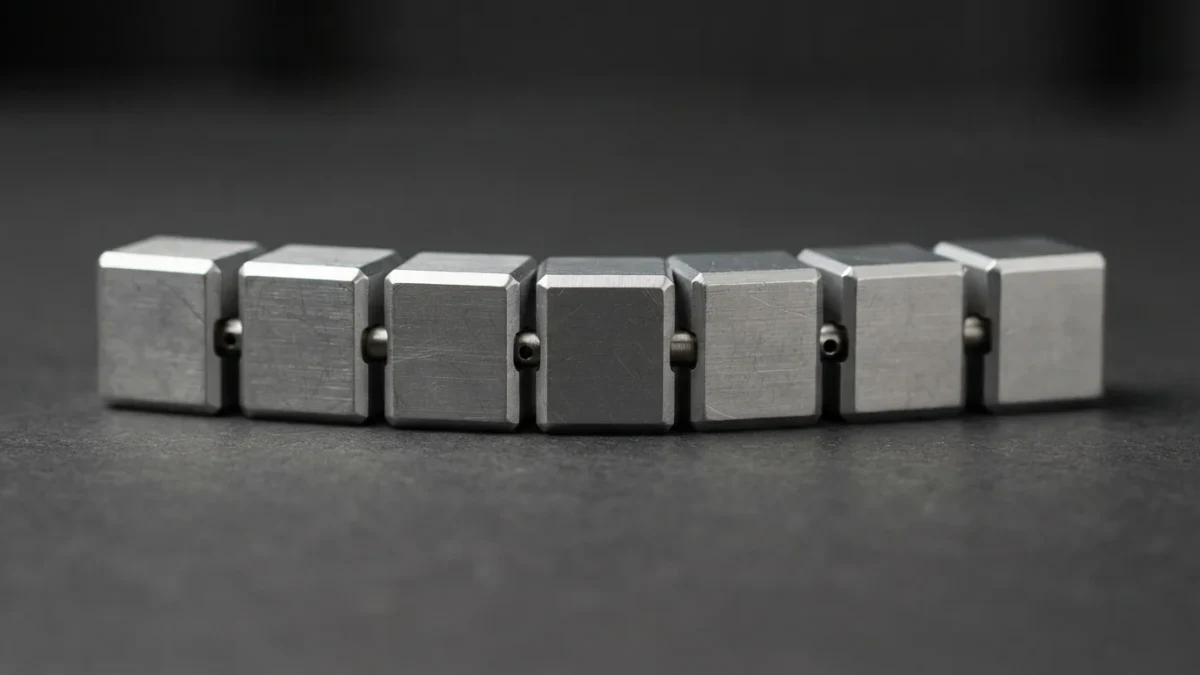
A blockchain block is a container of two parts: a header of metadata and a list of confirmed transactions. The header carries a fingerprint of the previous block, a summary of the transactions inside, and the details of the puzzle that created it. This structure is what turns separate batches into one chain.
A quick note as ever: L4 News publishes information, not investment advice. Crypto assets can lose most or all of their value quickly, and nothing on this site is a reason to buy any of them. What follows is plumbing, not a pitch.
What is in a block header?
Six small fields of metadata. The version marks the software rules in force. The previous block hash ties this block to its parent. The Merkle root summarizes the transactions. A timestamp, a difficulty target and a nonce record when the block was made and which puzzle solved it. Together, they identify the block.
Think of the header as the block's passport and the transaction list as its cargo. Border control — every node on the network — checks the passport first, because it is tiny and fixed-size, and only then inspects the cargo. NIST IR 8202, the U.S. standards body's 2018 overview of blockchain technology, walks through these fields without promoting any particular network.
| Header field | What it does |
|---|---|
| Version | Marks the rule set the block follows |
| Previous block hash | Points to the block immediately before |
| Merkle root | One-line summary of all included transactions |
| Timestamp | When the block was produced, roughly |
| Difficulty target | How hard the puzzle was at that moment |
| Nonce | The winning guess that solved the puzzle |
What is the Merkle root and why does it matter?
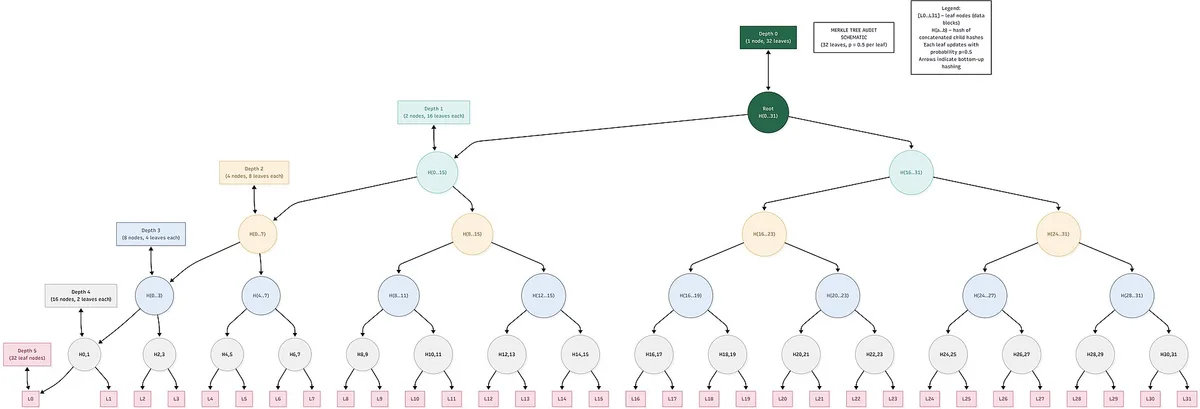
The Merkle root is a single fingerprint computed from every transaction in the block. Change one character anywhere in those transactions and the root changes, which changes the header, which changes the block's own hash. It is a tamper alarm with no off switch, and it lets light clients verify transactions without storing them all.
The trick is that the fingerprint is built like a tournament bracket. Transactions pair off and hash together; winners pair off again; the process repeats until one value remains — the root. Any change to any match cascades to the final score, so a node that stores just the header can prove a transaction was included by checking a short path through the bracket rather than the whole block.
What are block height and the block hash?
Height is the block's position number, counted from the very first block. Bitcoin's first block — the genesis block — sat at height zero when it was mined on January 3, 2009. The block hash is the block's identifier: recompute the header and you get it, which is why headers cannot quietly change.
Height is public shorthand. When Bitcoin's block subsidy fell in April 2024, the event landed at height 840,000, and reporters could name the exact block. The hash is longer and less quotable — a string of hexadecimal digits — but it is the identifier other blocks reference, wallets quote as a transaction anchor, and explorers use as a page key.
The two are related but not interchangeable. Height tells you where a block sits; the hash tells you exactly what it contains. Two honest blocks can briefly share a height when miners race; they can never share a hash, because identical contents would mean identical history.
How do transactions get into a block?
They wait their turn in a public queue that developers call the mempool, then a miner or validator assembles a batch, usually favoring the highest fees when the block is nearly full. Bitcoin targets roughly ten minutes per block; Ethereum targets around twelve seconds. Fees surge when the queue does.
The queue is open to view, which surprises newcomers. Before your transaction confirms, it sits in the mempool where anyone can see it waiting, along with the fee it offers. Block builders rationally take the best-paying transactions first, so during congestion, a low-fee payment can wait hours while richer offers skip the line — the network is not malfunctioning, it is auctioning space.
Block space is deliberately scarce. A Bitcoin block holds a few megabytes at most; an Ethereum block holds a bounded amount of computation. Scarcity is what makes the fee auction coherent, and it is why scaling conversations — bigger blocks, second layers, faster cadences — all orbit the same constraint.
Why does every block point to the one before it?
Because that pointer is what makes it a chain. Each header embeds the previous block's hash, so editing any historical block breaks its own hash, breaks the next block's reference to it, and cascades forward through every later block. Rewriting history means redoing all the work after it, too.
This is where the container analogy earns its keep. Picture a shelf of sealed envelopes, each one carrying a photograph of the previous envelope — the analogy breaks down here: photographs can be forged, while a forged reference fails instantly against the hash everyone else recomputes. Verification costs a laptop milliseconds; forgery costs an industrial mining operation.
The result reads like a notarized diary that cannot be re-bound. You can read any page, check the photograph against the page before it, and trace the whole shelf back to the first entry from January 2009. That audit trail, boringly verifiable by any machine, is the property the entire structure exists to provide.