
Security
What is a rug pull, and how to spot one
The team takes the money and runs — through the liquidity pool, a hidden mint, or tokens you were never able to sell in the first place.
Security records how digital assets are lost: contract vulnerabilities, bridge failures, key compromise, malicious approvals, and social engineering that bypasses code entirely. Incident post-mortems sit alongside preventive practice. Intended for holders, protocol teams and compliance staff who want attacks described in enough detail to defend against them.
Documented attack surfaces across contracts, bridges and users, with post-mortems of major losses and the habits preventing the most common thefts.
The team takes the money and runs — through the liquidity pool, a hidden mint, or tokens you were never able to sell in the first place.

The signature that lets a contract spend your tokens is convenient by design — and it is exactly what a fake 'claim your reward' page is built to collect.
Scammers seed your transaction history with look-alike addresses so that one careless copy-paste sends real money to them — and the usual check won't catch it.
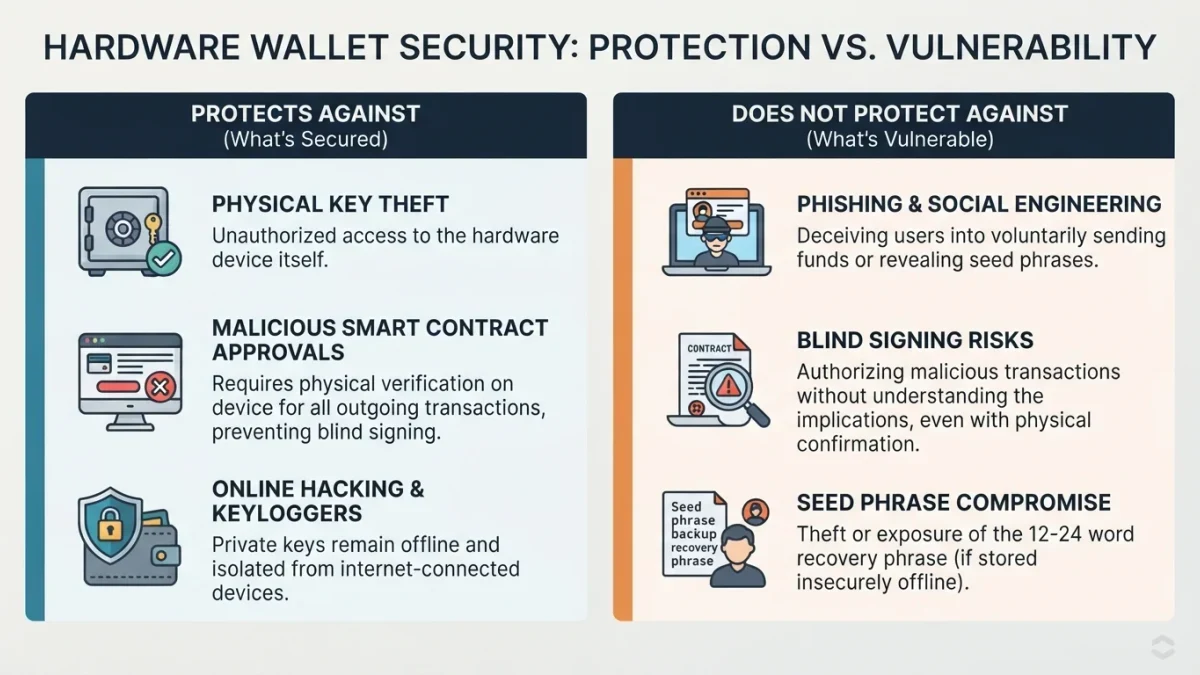
A hardware wallet keeps your private keys offline — powerful against remote theft, powerless against a transaction you confirm with your own hands.

Phishing sites copy the real thing down to the pixel — the only part they cannot copy is the domain, and one careful habit is enough to check it.