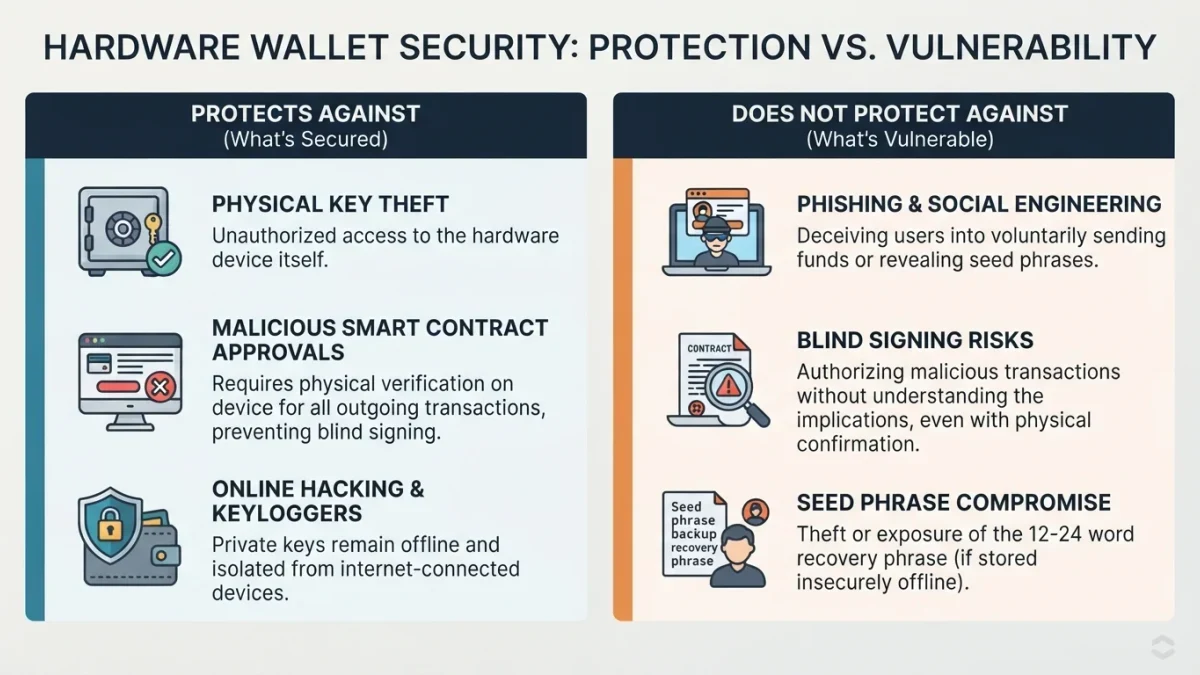
A wallet recovery plan is your prepared answer to losing a device, a password, or yourself: the recovery phrase backed up offline in more than one medium and location, a restore you have actually tested, and instructions a trusted person could follow. It protects against loss; it cannot protect a phrase you've already leaked.
L4 News publishes information, not investment advice, and self-custody is never risk-free — a recovery plan manages the risks you choose to carry. The steps below describe physical security, not any particular wallet brand; names differ, the discipline doesn't.
What does a complete plan cover?
Four things: where the recovery phrase lives, in how many copies, whether restoring actually works, and who can act if you can't. A plan missing any one of these fails in a specific, predictable way — an untested backup fails silently, and unshared knowledge fails your heirs. Write the plan down; memory is not a location.
Notice what is not on the list: speed. Recovery is rarely urgent — a lost phone or a forgotten PIN gives you days, and death gives your family years. That calm is the whole opportunity: you can do this slowly, once, and correctly.
Paper or steel for the backup itself?
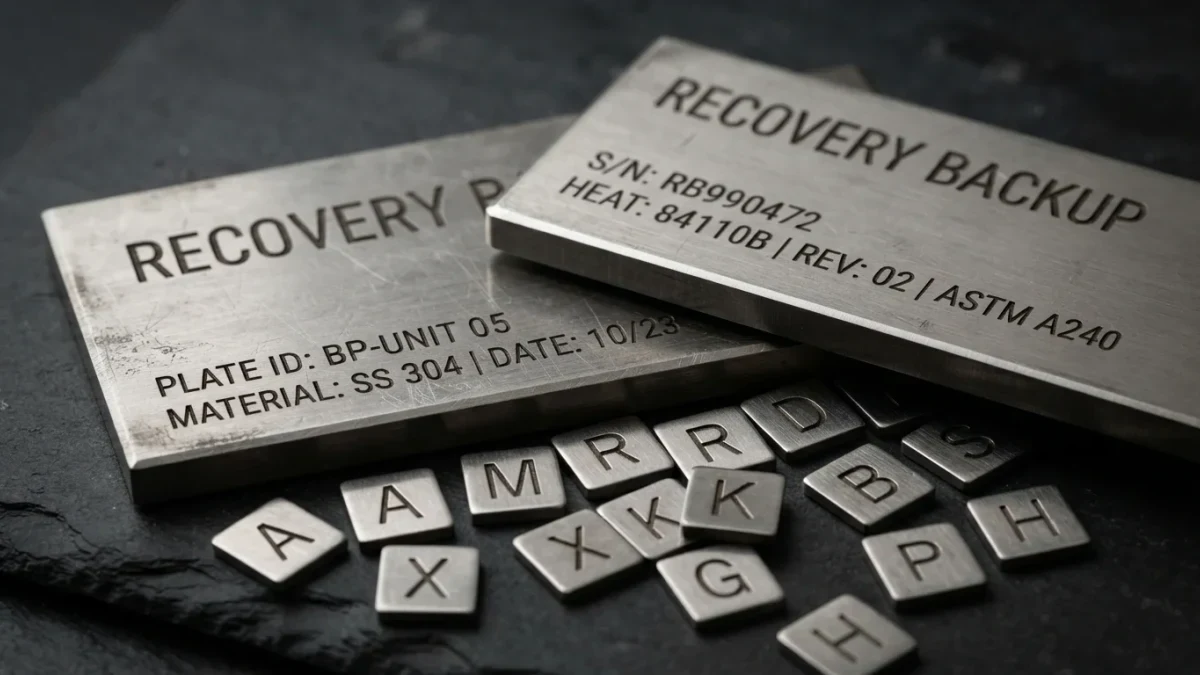
Both, in different places. Paper is free, immediate, and vulnerable to fire, water, and time; stainless-steel plates survive house fires and floods that paper doesn't. Steel also doesn't protect against the thing that matters most — someone finding it. Two media, two locations, one phrase: that's the redundancy that earns the name.
Steel backup plates are exactly what they sound like: metal tiles or stamped plates carrying the words, sold by wallet makers and third parties, or stamped by hand with a basic kit. The realistic threat model favors them — house fires and burst pipes destroy paper backups far more often than thieves conduct phrase-hunts — but their protection ends at physical survival. A steel plate found and read is as fatal as a paper one.
Which is the argument for the second half of the rule: location redundancy. One backup lost is an incident; two lost, in independent ways, at the same time, is a tragedy of planning.
How do I build the plan, step by step?
Set aside an unhurried hour. Every step carries its own caveat, because each one is also the place people cut corners.
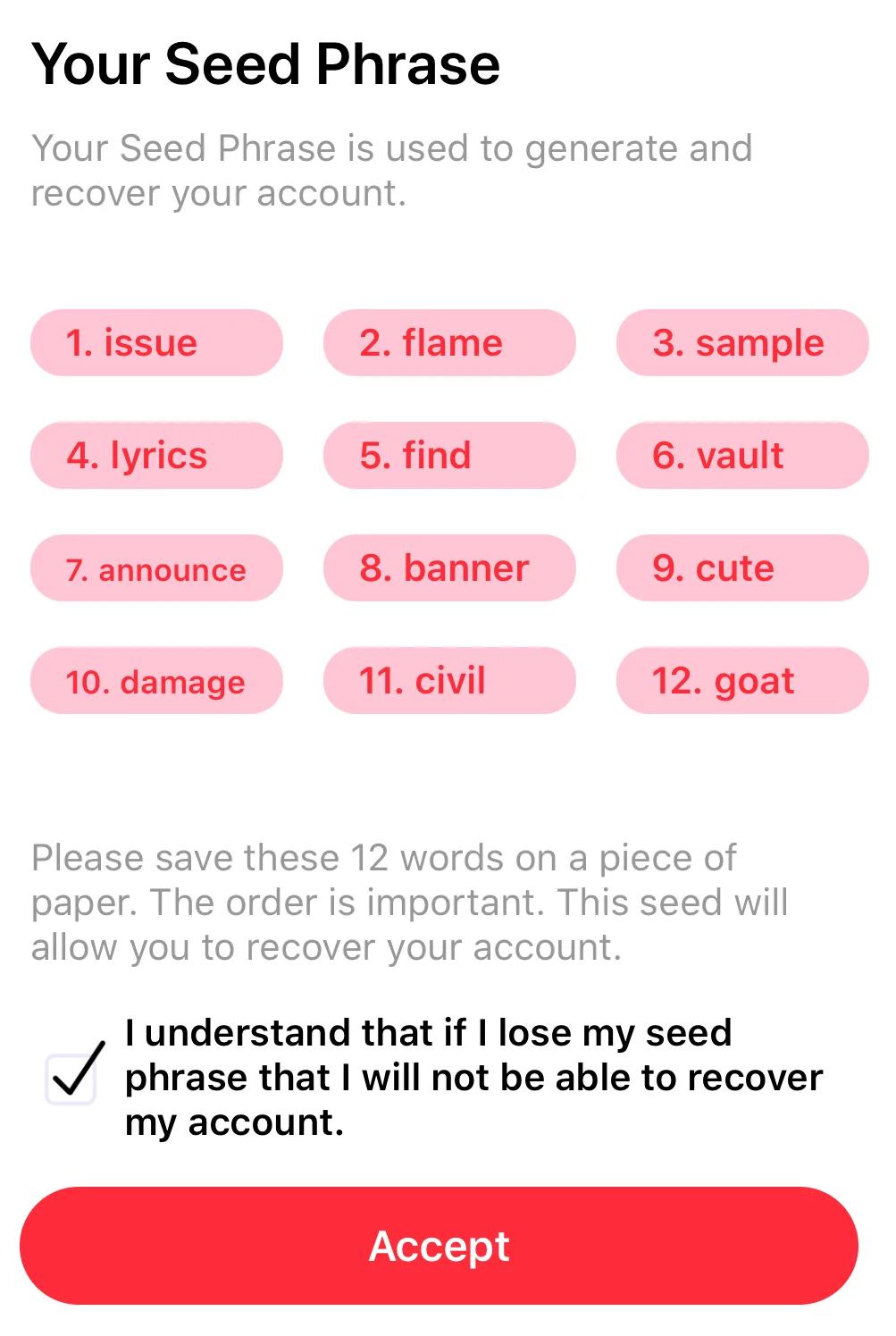
- Write the phrase by hand, from the device screen. Copy each word in order, then check the whole sequence twice against the screen — a single misordered word makes the backup useless. Caveat: no photos, no cloud notes, no typing it into anything with a radio or a keyboard; the phrase exists digitally nowhere, or the plan has already failed.
- Make the primary backup at home, hidden. A drawer beats a famous safe that advertises its contents; the goal is obscurity plus fire resistance, in that order. Caveat: wherever it lives, someone cleaning aggressively will find it — assume discovery, and make discovery harmless by keeping the second copy elsewhere.
- Put the second copy somewhere geographically separate. A bank deposit box, a trusted relative's home, a fire bag at the office — one flood or fire should not reach both. Caveat: every copy is a target and every custodian a risk; a relative needs to know what they hold and what silence surrounds it, without needing the words themselves.
- Test the restore with a small amount. On a fresh device or an empty wallet app, enter the phrase, confirm the expected address appears, and send a trivial sum to it and back. Caveat: typing the phrase is the highest-risk moment in this entire guide — do it on a device you trust, offline where possible, and wipe the wallet app afterward; the test proves the backup, not the machine.
- Write the access letter. One page for whoever would act for you: what wallets exist, where each backup lives, roughly what they control, who to ask for help. Caveat: the letter names locations and people — it must never contain the phrase, a passphrase, or enough to reconstruct them; it is a map, not the territory.
- Review annually and after every change. A moved backup, a new passphrase, a different wallet — each quietly invalidates parts of the plan. Caveat: especially the passphrase, if you use one; the step below explains why it belongs in the review even when nothing else changed.
How do I plan for the people who'd inherit this?
Crypto inherits badly by default: funds controlled by a phrase nobody can find, in a wallet nobody can name, listed on no statement. The access letter fixes the findability half, and it's the half that fails most often — heirs usually don't lack skill, they lack the map.
For larger holdings, two additions earn their complexity. A lawyer or executor who knows the letter exists — not necessarily what's in it — keeps the map from dying with you. And some wallets support multi-share backups, splitting a phrase into several shares where any two of three rebuild it: one share alone reveals nothing, which lets you distribute shares more widely than you'd ever distribute the whole phrase. The scheme is real and documented; it is also one more thing to test before you rely on it.
Does a secret passphrase make this safer or riskier?
Both, and the direction depends entirely on you. A passphrase acts as a twenty-fifth word creating hidden wallets no phrase alone can reach — strong if you can remember it forever, catastrophic if you can't. For most people, more redundancy on a plain phrase beats one clever secret nobody can reconstruct.
The mechanics are worth knowing before deciding. The passphrase doesn't encrypt the phrase; it derives a different wallet from it — wrong passphrase, different addresses, and no error message to tell you so. Backed up nowhere, it is a single point of failure wearing a disguise; backed up separately from the phrase, it becomes a real second lock, because then an attacker needs two secrets held in two places.
Decision rule: use one only if you can honestly answer where it will be backed up, who besides you knows it exists, and how your heirs would ever learn it. Otherwise, plain phrase, two copies, two places — and sleep.