
Blockchain
Layer 1 vs Layer 2, explained
Layer 1 is the base chain where everything settles; Layer 2 is built on top of it — the Layer 1 vs Layer 2 distinction, in plain words.
How distributed ledgers reach agreement, what a block contains, when a transaction becomes final, and which guarantees a chain does not provide.
Layer 1 is the base chain where everything settles; Layer 2 is built on top of it — the Layer 1 vs Layer 2 distinction, in plain words.

A blockchain node is any computer holding and checking a copy of the shared record — here is who runs them and why the crowd matters.

The hard fork vs soft fork difference is compatibility — one tightens rules that old software still accepts, the other splits a chain in two.
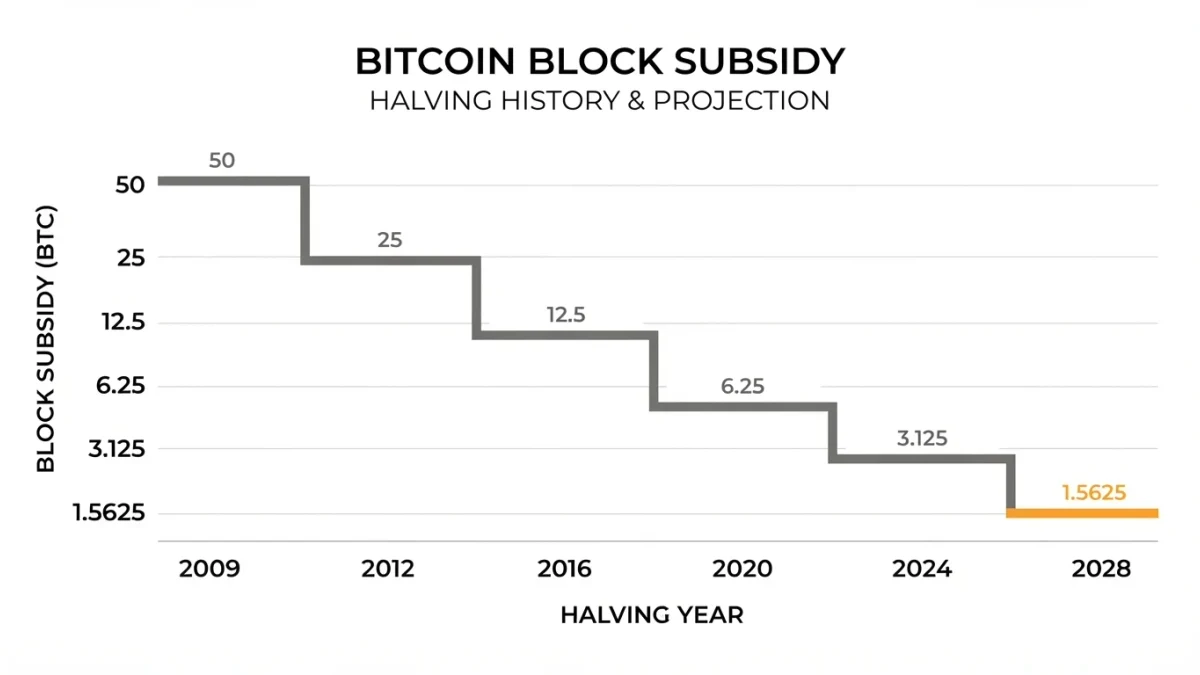
The Bitcoin halving is the protocol rule that cuts the block subsidy in half every 210,000 blocks — the next drop, 3.125 to 1.5625 BTC, is expected around 2028.
A 51% attack is what happens when one party commands most of a blockchain's power — it can rewrite recent history, but far less than headlines imply.