
A bond is a loan you can buy. When a government or a company borrows money, it sells bonds to investors, and those investors become lenders. The borrower pays interest, called the coupon, and repays the original amount, called the principal, on a set date known as maturity. That much is the plumbing.
What matters for your wallet is the yield — the return a bond pays at its current market price. When yields on government bonds move, they drag mortgages, car loans, savings rates and even news headlines along with them. A bond is not a promise of profit; prices can fall, and a bond fund can lose money. But the mechanism is worth understanding, because it touches almost every interest rate you will ever be quoted. Readers following this should also see Currency exchange rates explained: who sets them and why they move.
What exactly is a bond?
According to Wikipedia's overview of bonds in finance, a bond is a security under which the issuer owes the holder a debt, and is obliged to repay the principal at the maturity date along with interest, called the coupon, over a specified period. The interest is usually payable at fixed intervals — most often semiannual or annual.
The same source makes a distinction that helps everything else fall into place. Bonds and stocks are both securities, but stockholders own a slice of the company, while bondholders are lenders. As creditors, bondholders rank ahead of stockholders if the company goes bankrupt — they get repaid first, though they still sit behind secured creditors. Bonds also have a defined term, after which the bond is redeemed, while stocks typically stay outstanding indefinitely.
The most common forms, per the same source, are government, municipal and corporate bonds. The word itself is old: the use of "bond" to mean an instrument binding one party to pay a sum to another dates from at least the 1590s.
Who issues bonds, and how do they reach the market?
Governments, companies and public authorities issue bonds to raise money. Governments use the proceeds to finance current spending; companies use them to fund long-term investment. Two routes dominate.
For corporate issues, the usual process is underwriting. A group of securities firms or banks buys the entire issue from the issuer and resells it to investors, taking the risk that it cannot sell the lot on. Government bonds, by contrast, are usually issued through an auction, in some cases open to both the public and banks, in others restricted to market makers.
Once issued, most bonds are negotiable — they can be traded in the secondary market. That is where the price moves, and where the yield is set day by day. The price there can differ substantially from the face amount printed on the bond.
Why does the price move, and what is a yield?
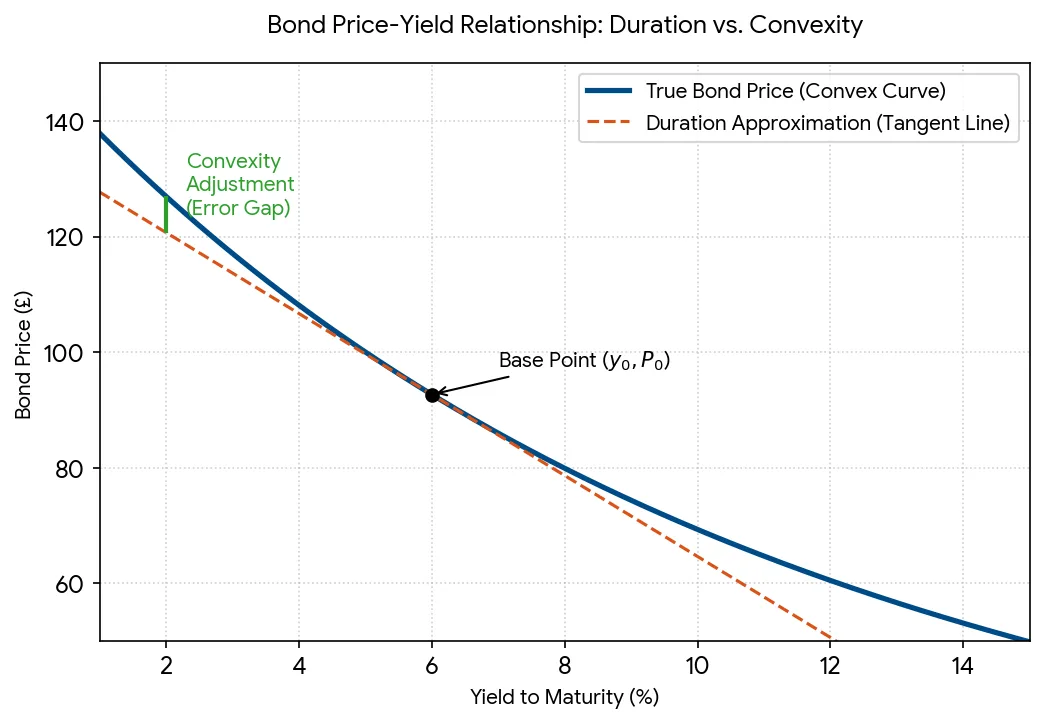
Here is the part that trips up newcomers. The coupon is fixed in advance. The price is set by the market. Those two facts together mean the effective return — the yield — moves whenever the price moves.
Think of it like a seesaw: when the price of a bond falls, its yield rises, and when the price rises, the yield falls. The analogy holds because the coupon payments stay the same either way; you are simply paying more or less for the same stream of payments. If a new buyer pays less for the bond, the same coupon represents a bigger percentage return on their money.
Why would the price fall? Because something better came along. If newly issued bonds pay higher coupons than the old ones, investors will not pay full price for the old ones. Expectations about inflation and interest rates drive this constantly. When investors expect rates to rise, existing bond prices drop, and yields climb.
How do bond yields reach your mortgage rate?
Lenders do not price a 30-year mortgage in a vacuum. They look at what the market pays for long-term government debt of a similar length, because that is their alternative use for the money and their benchmark for risk. When long-term government bond yields rise, mortgage rates tend to follow. When yields fall, mortgage pricing usually eases, though not always in lockstep.
The same logic runs down the ladder. Banks price loans against their own cost of funds, which is tied to the wider rate environment that bond yields reflect. Savings account and certificate rates move too, more sluggishly. This is the ripple the brief asks about: a shift in the government bond market starts at the top and arrives, weeks or months later, in the rate quoted at your bank counter.
Our analysis: the lag is the practical takeaway. Bond yields are the leading indicator; the rates on your loans and deposits are the trailing ones. If headlines report a sharp move in long-term government yields, expect the effect on consumer rates to arrive gradually rather than overnight.
What does this mean for savings and headlines?
Rising yields cut two ways for ordinary households. Borrowers feel them as higher mortgage and loan rates. Savers feel them as better returns on deposits and on bond investments — eventually. Falling yields reverse both effects.
Headlines follow the same signal. "Yields rise" stories usually mean bond prices fell, often because investors expect higher rates or higher inflation. "Yields fall" stories usually mean the opposite. Once you know the seesaw, the financial press reads differently: the yield number is the market's running verdict on where rates and inflation are headed.
One caution belongs here. A bond is generally steadier than a stock, but it is not risk-free. Its market price can fall well below what you paid, and a bond fund can post losses. Anyone holding bonds through a fund should understand that the maturity date protects the original holder, not the trader who bought in midstream at a premium.
The quiet market, in one page
The evidence supports a simple chain. Governments and companies borrow by selling bonds that pay a fixed coupon and repay principal at maturity. Those bonds trade in a secondary market where prices and yields move inversely. Lenders benchmark long-term loans such as mortgages against long-term government yields. Savings rates and headlines follow, with a lag. This connects to our earlier piece, Why crypto prices move the way they do.
What remains unsettled is timing. The link between yields and consumer rates is real but loose, and the lag varies with conditions no explainer can pin down. Watch the direction of long-term government yields if you want an early read on where your mortgage quote or savings rate is likely heading — and treat any single day's move as noise until the trend holds.