A bitcoin treasury company is a publicly listed company that raises capital primarily to buy and hold bitcoin, making the coin its main balance sheet asset rather than a byproduct of a normal business. Strategy, formerly MicroStrategy, built the template starting in August 2020, and dozens of imitators followed through 2024 and 2025.
These companies put a volatile asset at the center of a capital structure, and that cuts both ways: crypto assets can lose most or all of their value quickly, and a company built around them can fall further and faster than the asset itself.
Why would a company hold bitcoin instead of cash?
The stated reason is a treasury policy choice: management argues that holding bitcoin preserves purchasing power better than large cash balances exposed to inflation. The second reason is financial: as of 2025, several of these firms traded at premiums to the value of their holdings, letting them sell shares and buy more bitcoin — accretive by arithmetic, if the premium lasts.
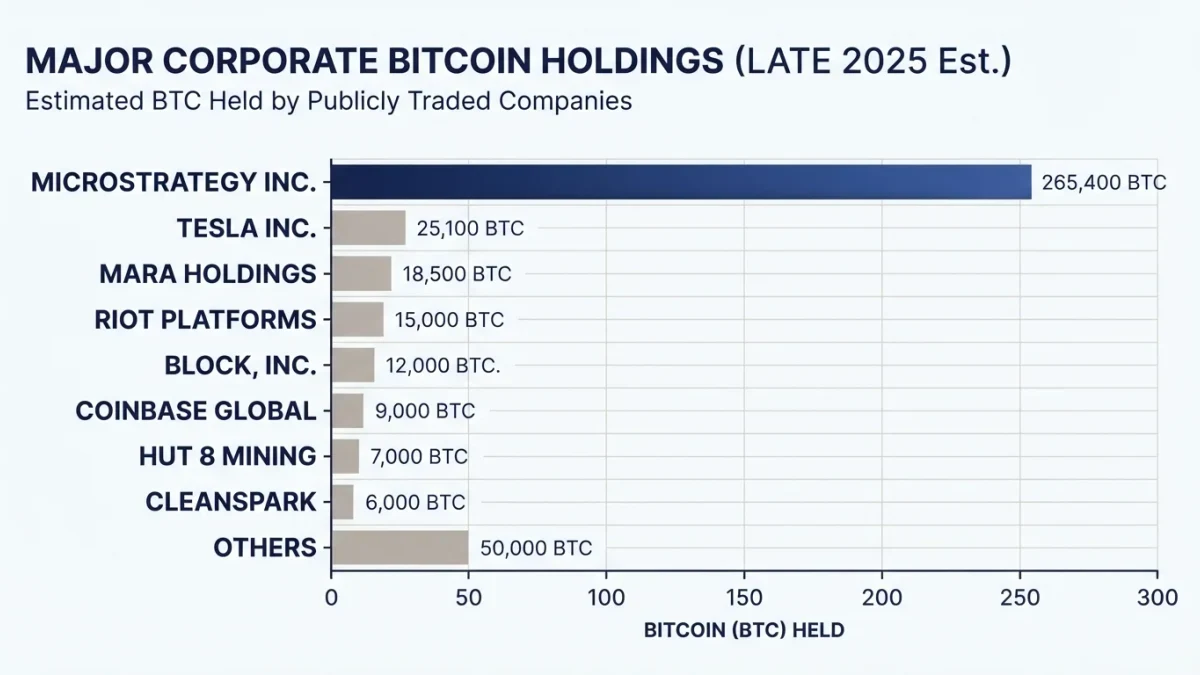
Strategy's path set the pattern. Beginning in August 2020, it converted corporate cash into bitcoin, then issued convertible bonds and stock to buy more, becoming the largest corporate holder of bitcoin in the world — hundreds of thousands of coins as of late 2025, per its own regulatory filings. The software business remained; the balance sheet became the story.
How did accounting changes make this easier?
Fair value arrived. Under the FASB's Accounting Standards Update 2023-08, effective for fiscal years beginning after December 15, 2024, companies measure certain crypto assets at fair value each quarter, with gains and losses flowing through earnings.
The old rules hurt. Crypto held as an indefinite-lived intangible had to be written down when its price fell but never written up when it recovered — a ratchet that made even a profitable holding look like a series of impairments. Fair value, which calendar-year companies adopted from 2025, fixed the asymmetry and made quarterly earnings reflect the asset's actual market moves, in both directions.
Who are these companies?
A spectrum, as of 2025. Strategy sat at the top by a wide margin. Semler Scientific, a medical device company, adopted a bitcoin treasury policy in August 2024. Japan's Metaplanet pursued the strategy through 2024-2025, and public trackers counted dozens of smaller names, many of them micro-caps, announcing similar policies.
The quality range matters. One well-known company with a real operating business is a different animal from a shell that swaps its business plan for a press release about bitcoin. Filings tell the difference: the SEC's EDGAR database shows who actually holds what, and at what cost basis, quarter by quarter.
How do they fund the purchases?
Three taps, usually. At-the-market equity programs sell new shares into the market over time. Convertible notes borrow now with the option for lenders to convert into stock later. And ordinary operating cash flow, where a real business exists, can be directed into bitcoin rather than other uses.
Think of the structure as a money pump — the analogy breaks down at the valve: a pump moves water mechanically, while this one depends on the stock trading above the value of the coins held. When the premium disappears, the pump stalls, and debt taken on during the good quarters still needs servicing.
What are the risks?
Concentration and reflexivity. The company's value becomes a leveraged expression of one asset's price, so a bitcoin drawdown hits the equity hard, and convertible debt adds fixed obligations on top. Share issuance dilutes existing holders; premiums can compress into discounts, closing the funding tap at the worst moment.
There is also a market-level concern analysts raised through 2025: as these companies accumulate a meaningful slice of outstanding bitcoin, forced selling in a crash — collateral calls, redemptions, creditor pressure — could amplify the very drawdown that caused it. Concentration cuts both ways in both directions.
| Traditional treasury | Bitcoin treasury | |
|---|---|---|
| Main asset | Cash, short-term bonds | Bitcoin, by policy |
| Accounting | Amortized cost | Fair value through earnings (from 2025) |
| Funding | Operations, conventional debt | Equity issuance, convertibles, operations |
| Key risk | Inflation eroding cash | Asset drawdown, dilution, debt overhang |
What does the trend mean for the wider market?
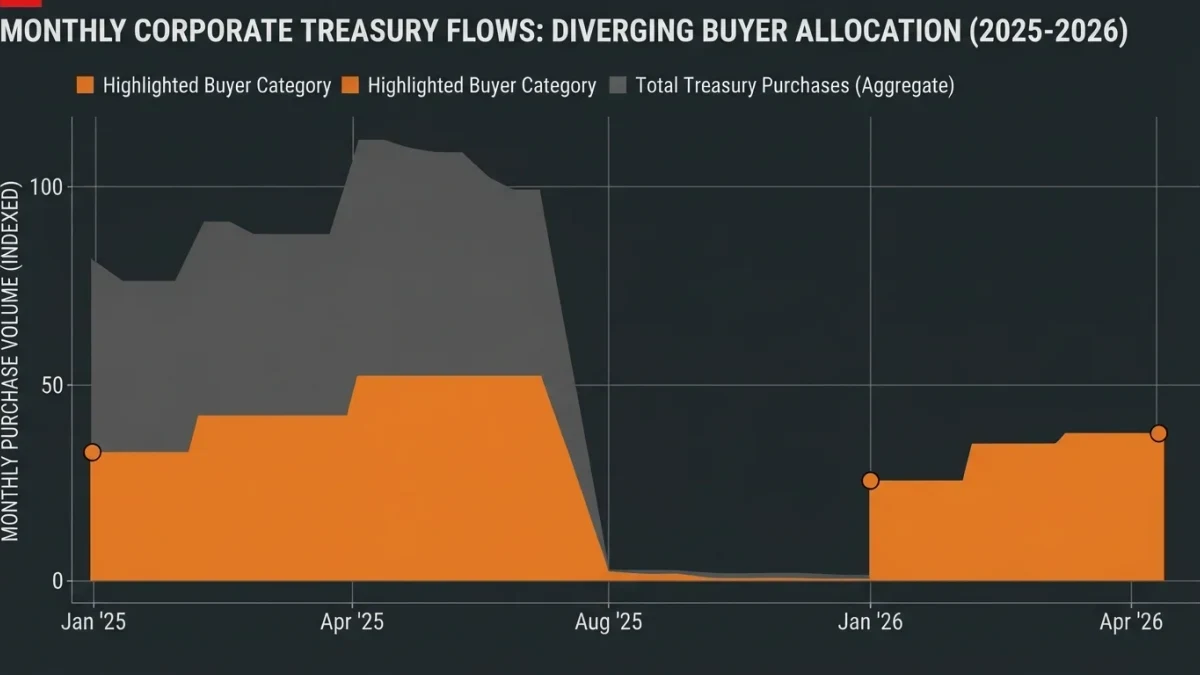
Two things, stated carefully. Coins move from liquid exchange supply to corporate cold storage, a structural demand story cited in the companies' own materials. And a new class of buyer exists whose behavior is governed by filings, premiums, and debt calendars rather than conviction — a shift in who the marginal holder is, not a promise about price.
For a newcomer, the compact version: bitcoin treasury companies are a wrapper around a volatile asset, built with equity and debt. Understanding the wrapper is not a reason to buy either the wrapper or the asset — it is context for a corner of the market that grew large enough to matter on its own.
What does the treasury-company trend mean for ordinary readers?
For most people, the trend is something to understand rather than act on. A treasury company is a listed stock whose value reflects its bitcoin holdings plus a premium or discount the market assigns, so its shares can move more sharply than the assets behind them. Reading the public filings is the only way to see how much bitcoin a company actually holds and what it says about its own strategy. Nothing here is a reason to buy anything, and crypto assets can still lose most or all of their value quickly.