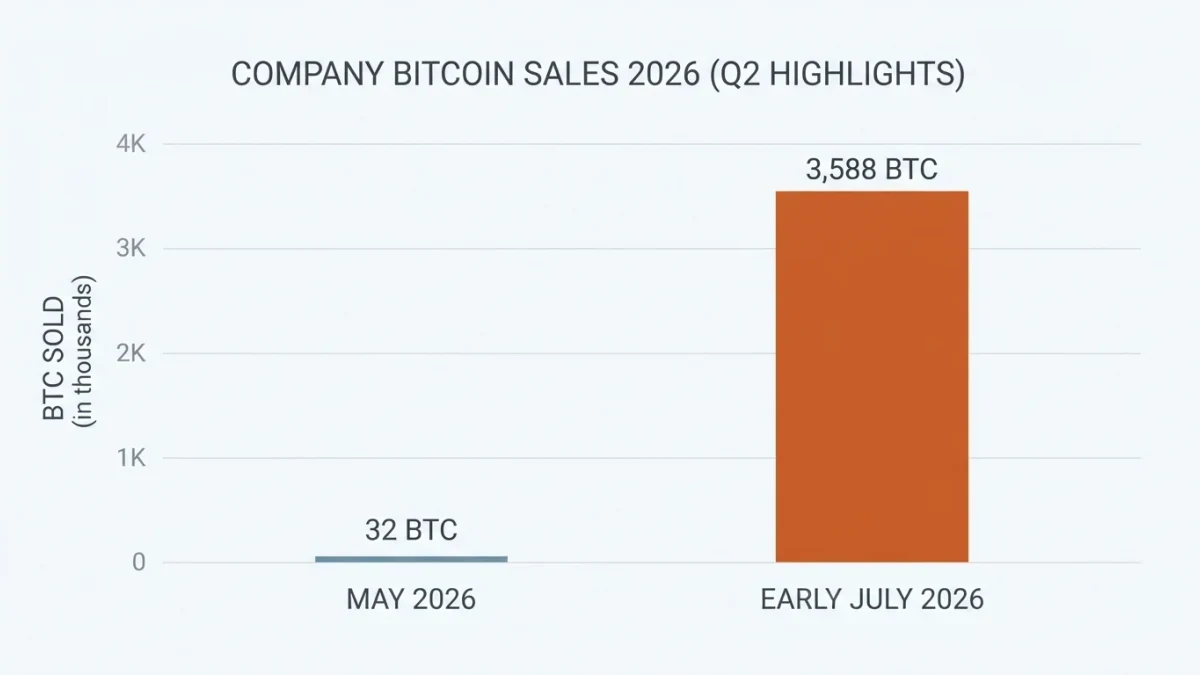
Strategy — the publicly traded company behind the largest corporate bitcoin treasury — sold 3,588 BTC for about $216 million between June 29 and July 5, 2026, its biggest bitcoin sale ever, disclosed on July 6, per Fortune. It followed a tiny sale of 32 BTC in late May, the company's first since 2022, per Investopedia.
L4 News publishes information, not investment advice. One company's trades are reporting, not a signal — and bitcoin's volatility runs in both directions regardless of who is selling.
Who is Strategy, and why does one sale make news?
The company formerly called MicroStrategy, led by executive chairman Michael Saylor. It reinvented itself as a bitcoin accumulator, financing purchases with debt and share issuance, and grew to hold more than 600,000 BTC as of its 2025 quarterly filings — by far the largest public-company stash. Its purchases had been watched as a standing bid; its sales get watched just as closely.
Two details made the July sale stand out. It was the company's largest-ever bitcoin sale, per Fortune's July 6, 2026 report, and it came after years in which the publicly stated strategy was, essentially, never selling. The late-May sale of 32 BTC — about $2.5 million — was the first crack; July widened it.
How big is the sale next to what Strategy holds?
Small against the stash, large against the precedent. The 3,588 BTC sold for roughly $216 million compare with holdings that exceeded 600,000 BTC in the company's 2025 filings — on the order of half a percent. By tonnage this is a pebble; by doctrine it is the first boulder moved.
Executives framed the earlier sale as routine — Investopedia reported analysts reading the long-term holding strategy as intact after the 32 BTC test. A doctrine tested once at 32 coins and again at 3,588 is still a doctrine being tested; what it becomes is a question of disclosures to come.
What did reporting say this means?
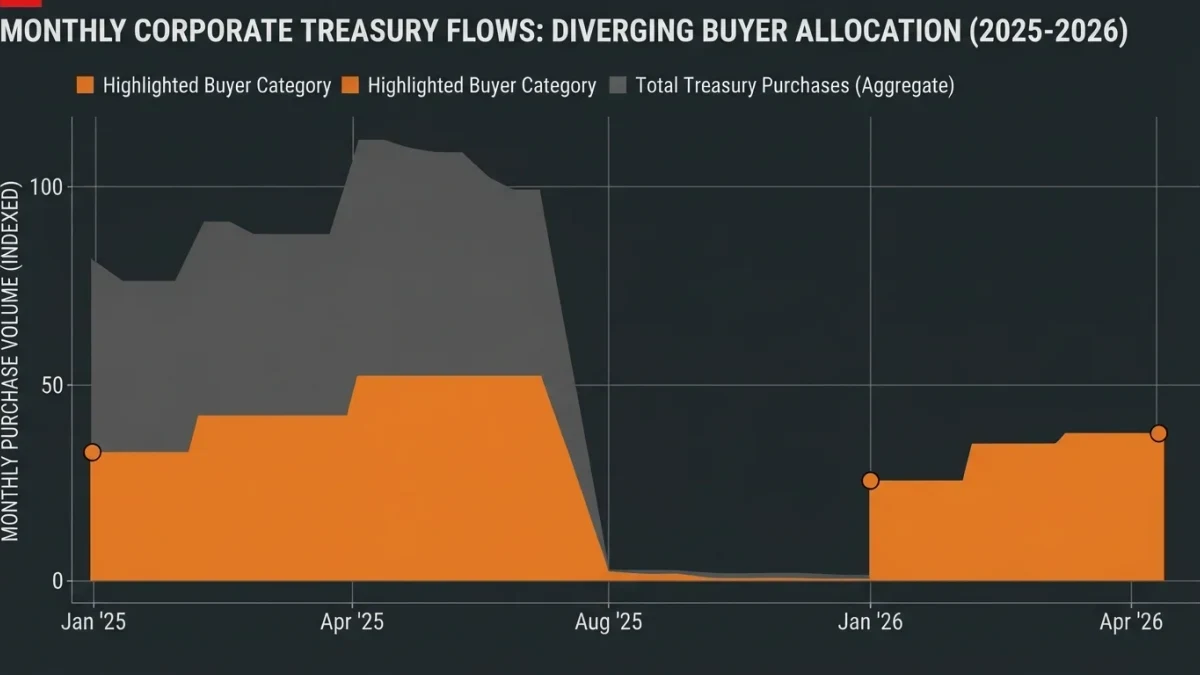
That the treasury-company trade is under strain. Reuters reported on July 13, 2026 that Strategy's sales shine a light on faltering crypto-hoarding companies — public firms that borrow and issue shares to hold bitcoin, whose combined market value peaked in July 2025 and has lost momentum since.
The mechanism those firms run on is reflexive: share issuance funds bitcoin purchases, and the premium of the shares over the bitcoin held funds more issuance. Bitcoin's 2026 price slide — the backdrop to Reuters' July 13 reporting — squeezes that loop from both ends.
Does one seller move the bitcoin market?
At this size, the sale itself is not the story — daily bitcoin turnover dwarfs $216 million. The signal is the seller: the most famous never-seller selling at all gives everyone else a new reference point for what large holders are willing to do in a weaker market.
Signals, though, are not forecasts. A company managing debt can sell for treasury reasons that say nothing about where prices go next. Treat the sale as a fact about one firm's finances, because that is what the disclosures support.
What should a beginner actually take from this?
That corporate treasuries are companies, not vaults. Strategy's bitcoin position is governed by its debts, its share price and its disclosure calendar — the same incentives as any leveraged firm, with bitcoin as the asset. When the finances tighten, the assets can move.
The habit worth building: when a big holder acts, read the filing, not the headline. What was sold, over which dates, for how much — those numbers live in the company's filings.